

How to Choose the Best Espresso Machines For Home
The most efficient espresso machines in your home should provide a consistently excellent cup of coffee. This requires a precise ratio of finely packed, tightly ground coffee and water at high pressure. It also requires an efficient wand of steam that can help texturize milk without forming large bubbles.
Some models come with an integrated grinder, while others require a grinder you supply. Our top picks feature PID controllers that are adjustable to maintain the stability of water temperatures, a shot timer to ensure proper extraction, and a dual boiler that allows you to pull a shot and steam milk simultaneously.
Buying an Equipment
A high-quality espresso machine is a great investment for those who wish to serve cappuccino, lattes and other drinks made from coffee at a café, restaurant or wine bar. When deciding which type of espresso machine to buy, you should consider how much control and personalization you'd like to have. A manual machine could be the best option for those who are just getting started. These machines utilize a lever for creating pressure during extraction. hyperlink include steam wands that are perfect for making milk beverages. However, keep in mind that these machines take many hours of work and can be difficult to learn to operate.
If you're looking to start taking your coffee skills to the next level, a semi-automatic coffee maker could be a great option. These machines are more hands-off yet still create coffee that is consistent and delicious. Semi-automatic machines also have a built in grinder and can save you money by not having to purchase and maintain a separate grinder.
Espresso machines that are professionally made or prosumer grade offer higher quality than consumer models, but they can be difficult to use and require more maintenance. They can cost thousands of dollars and it's crucial to understand your requirements and how much time you're willing to spend on upkeep and maintenance prior to making a purchase.
Some models come with a dual boiler, which allows you to make both espresso and milk at the same time. However, Giorgio warns that these systems aren't always more efficient than ones with a single heating system, because there is a delay between when the espresso is made until when the milk is frothed.
If you're purchasing a machine for your business, it's even more important to think through your needs. If you're looking for a way to eliminate human error, think about an entirely automated or capsule machine. These models can reduce your time spent making espresso and help you maintain a consistent taste by eliminating the need to grind beans, extract espresso and steam milk.
Getting Started
A home espresso machine will transform the taste of your morning coffee. But, it's important to remember that the perfect cup of espresso requires a lot of expertise and time. You'll want a machine that is simple to use even for novices, and will encourage you to keep learning.
Certain of our choices, such as the Rancilio Silvia offer a variety of customizations aftermarket to make your espresso maker feel authentically personal. Similarly, other espresso makers let you replace the handle with a different material for an improved grip and appearance, such as wood or a piece made from recycled skateboards (you'll need to wait until the pre-orders are available).
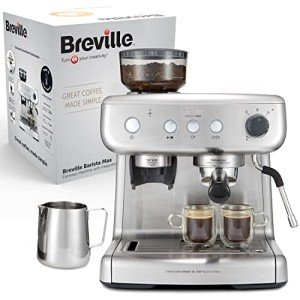
There are many basic espresso machines that make great drinks if not yet ready to invest in an entire professional machine. A lot of them are built with the same principles as professional machines but scaled down to accommodate a home kitchen. The Breville Barista Pro X, for instance, features an adjustable PID controller that can be adjusted front and center that lets you set the temperature of the water to a precise level and a shot timer to track your brewing progress, a powerful steam wand that's capable of texturing milk, and an indicator of pressure that will let you know when you've reached your ideal pressure for brewing (between 8 and 10).
If you're looking to elevate their barista skills to the next level There are options for dual boilers that allow you to brew espresso and steam milk in the same time. This feature ensures consistency in your results, since both processes need to be heated to the same temperature. You can also experiment with different extraction ratios to accommodate various drinks.
If you decide to purchase a machine equipped with this feature, it's recommended to purchase additional accessories, including a Group Head Cleaner for cleaning the brew port and a Descaling Kit. You can also use Espresso Machine Cleaner instead of water to remove old coffee residues that could affect the taste of your coffee. These supplies will allow you to maintain your espresso machine correctly and ensure that it is always ready to create great drinks for yourself or your guests.
Making Great Drinks
Making espresso and coffee drinks is a tricky process. It is essential to be precise throughout the entire process, from weighing the grounds to tamping it just right. The top espresso machines have various features that make making coffee as simple and consistent as it is possible. This includes a quick heat up time, automatic coffee brewing, and steam wands that are easy to control for texturing the milk.
If you're just starting to learn about the world of espresso we suggest one of our picks for newbies such as the Breville Bambino Plus. This machine is super-automatic and makes use of whole beans and comes with five drink presets that make it simple to brew shots of espresso cappuccino, latte macchiato, cappuccino, or black coffee. The machine is also easy to clean and has an integrated milk frother that can create foamy, rich lattes and cappuccinos.
Our test subjects were satisfied with the quality of drinks produced by this machine. However, it's worth noting that if you're committed to the quality of your coffee, it may be a good idea to purchase an espresso maker that comes with an integrated grinder and more customizable options. The Rancilio Silvia costs more than the Bambino Plus, but it offers more control over the making process. It also includes a dual boiler, which allows you to steam milk while pulling an espresso shot simultaneously. This can help you create your drink to perfection.
If you're willing spend more, you should consider a professional-grade espresso machine like the Lelit MaraX. This model was awarded our top spot in our Best Prosumer Espresso Maker category, and is basically an upscale version of commercial espresso machines (think: Vitamix blenders). If you're a total coffee lover this machine is definitely worth the investment. Morocco and Sheese both point out that an espresso machine is only good when it's coupled with. There are a few grinders that are priced in this range and are great for espresso. (Morocco prefers the Fellow Opus). We recommend pairing your espresso machine with a good burr grinder, no matter the type of machine you choose.
Maintenance
It's only fair to try your best to keep up with the espresso machine after you've spent a lot of time and effort to get it to produce excellent shots and drinks. This means incorporating regular cleaning and maintenance into your routine. This is important since even the most powerful machines can experience obstructions that are not visible within the internal mechanisms. These blockages will obstruct the movement of steam and water. This can lead to lower pressure or a loss of performance.
A few minutes every day, along with a bit of time set aside for thorough cleaning every month, will suffice to prevent the build-up of coffee residue, oils, and scale that can taint the flavor of your espresso and eventually cause damage to your expensive equipment. Cleaning your espresso machine isn't an easy task.
For the majority of models the brew group is easily accessible to clean. This includes the rubber gasket three-way solenoid, and dispersion screen. It's recommended to clean the portafilter and the basket after each use as they could be a source of rancid oils that alter the flavor of your shots.
Before you begin this process, you'll need to be sure that you have an espresso portafilter (and empty ones) as well as the most compact size of brush, or Coffetool and espresso machine cleaner. Before you scrub the portafilter, soak it in a solution made of hot water, vinegar and detergent. You'll also need to remove the brass dispersion plate as well as the stubby screw from the group head. This will enable you to backflush your group head. Urnex Cafiza is used to flush the system. This will not just remove some calcification but also any coffee oil that could be blocking your three-way valve, hindering water flow through the system.
Follow the manufacturer's guidelines for cleaning products. Certain products can harm your equipment or cause mineral deposits. Make sure you use clean, filtered water to decrease the amount of calcium present in your boiler tank.